

Vol. 42, No. 07
07/01/2026
Their Lives, Fortunes, and Sacred Honor
AT A GLANCE
• The 56 signers of the Declaration of Independence pledged their lives, their fortunes, and their sacred honor in support of the Declaration.
• They knew that by signing, they were committing high treason against the British crown.
• Fortunes and even lives were lost — but no one sacrificed his sacred honor.
• This essay recounts the inspiring stories of some of the signers and their sacrifices — stories that should be much better known today.
Caesar Rodney was weary when he reached his plantation near Dover on the night of July 1, 1776. An outspoken advocate of American independence, Rodney was exhausted from many months of battling Delaware’s Tories while building up and drilling the colony’s militia. The 47-year-old son of a plantation owner, he was first elected to the colonial legislature in 1761, and sent to the First and Second Continental Congresses. Caesar Rodney was also afflicted with a painful and unsightly facial cancer. So terribly was he ravaged by the disease that he wore a green silk scarf over part of his face, and was described by one colleague as “an animated skeleton, with a bandaged head.”
Tonight there was to be no rest for this weary patriot. An urgent message from his colleague, Thomas McKean, now demanded his presence in Philadelphia “at the earliest possible moment.” McKean and George Read, the other two representatives from Delaware, were split on the issue of independence and Caesar Rodney’s vote was needed if Delaware was to join the United States of America.
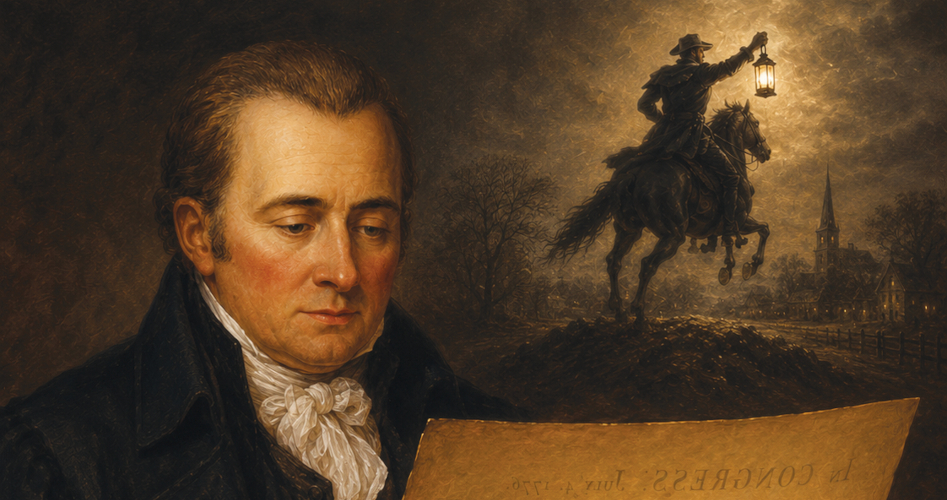
But Philadelphia was 80 miles away and a torrential rainstorm was swamping the region between the two cities. Exhausted, wracked by cancer, Rodney set out after dusk and rode all night through the pouring rain and the crashing thunder, stopping only long enough to change horses. As he raced through the stormy darkness, it must have occurred to Caesar Rodney that a political storm was rising out of Philadelphia that would change the course of history. It was a storm which had been building for more than a decade as the British Parliament and King George III imposed one oppressive measure after another on the colonies, increasing their taxes and decreasing their freedoms.
Premium Content
Sign in with your ShopJBS.org account to read the full article, or subscribe below for unlimited digital access.
Log In to Continue Reading
- 12 Issues Per Year
- Digital Edition Access
- Digital Insider Report
- Exclusive Subscriber Content
- Audio provided for all articles
- Unlimited access to past issues
- Cancel anytime
- Renews automatically

- 12 Issues Per Year
- Print edition delivery (USA) *Available Outside USA
- Digital Edition Access
- Digital Insider Report
- Exclusive Subscriber Content
- Audio provided for all articles
- Unlimited access to past issues
- Cancel anytime
- Renews automatically