


Vol. 42, No. 05
05/01/2026
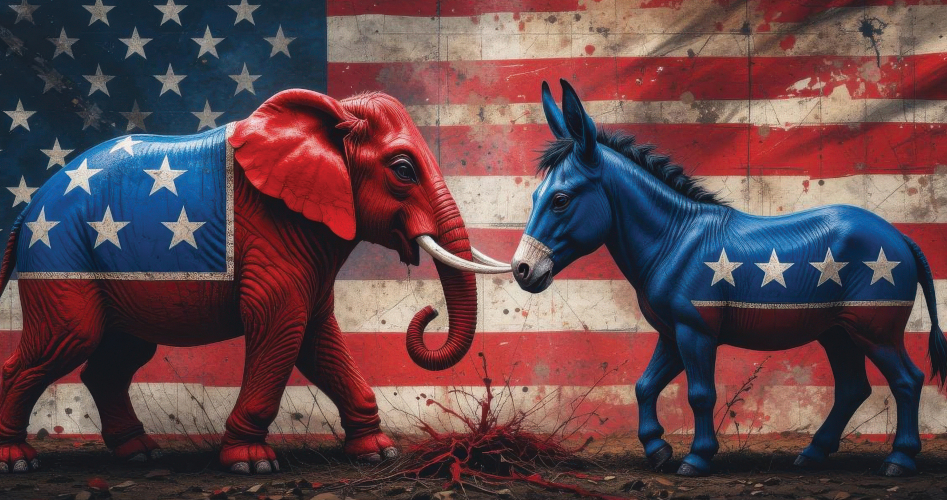
The Two-party Illusion
AT A GLANCE
• The two major parties in U.S. politics appear to occupy opposite sides of the political spectrum.
• Any difference between parties is less defined at the top than with the rank and file.
• By controlling both sides of the street, the elites can offer the people a “choice” that is no choice at all.
The year was 1952. Robert Taft, a three-term U.S. senator from Ohio known as “Mr. Conservative,” was running for the Republican presidential nomination. This was his third and most promising try. He was the clear favorite among Republican voters, a prospect that was terrifying to the Establishment.
Taft was a true believer in small government and the free market. He had emerged as the leader of the GOP about six years earlier, in 1946, when Republicans took both chambers of Congress. That Congress ended up cutting taxes, balancing the federal budget, and reducing the national debt. It accomplished all that under Taft’s leadership.
By 1952, though, the elites had sufficient control of the machinery of both parties to enable the historic nomination skulduggery that happened later that year. But despite its stranglehold over both parties, the Establishment had yet to fully convince average Republican voters to embrace internationalism and the welfare state. That mission would be accomplished over the following decades.
Premium Content
Sign in with your ShopJBS.org account to read the full article, or subscribe below for unlimited digital access.
Log In to Continue Reading
- 12 Issues Per Year
- Digital Edition Access
- Digital Insider Report
- Exclusive Subscriber Content
- Audio provided for all articles
- Unlimited access to past issues
- Cancel anytime
- Renews automatically

- 12 Issues Per Year
- Print edition delivery (USA) *Available Outside USA
- Digital Edition Access
- Digital Insider Report
- Exclusive Subscriber Content
- Audio provided for all articles
- Unlimited access to past issues
- Cancel anytime
- Renews automatically