

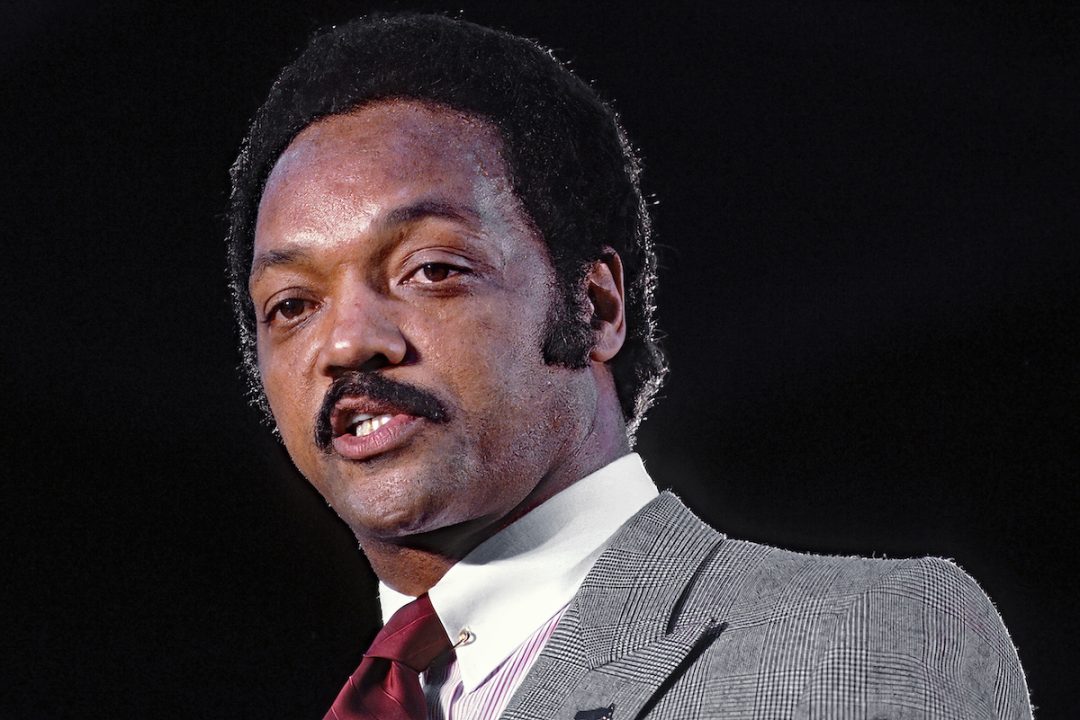
The Passing of Jesse Jackson (1941-2026)
The Reverend Jesse Jackson, a prominent figure in the American civil rights movement, passed away on February 17 at the age of 84. His family announced that he died peacefully in Chicago, surrounded by loved ones, after battling Parkinson’s disease since 2017 and progressive supranuclear palsy in recent years.
Jackson’s death marks the end of an era for a leader who bridged the legacies of Dr. Martin Luther King, Jr. and former U.S. President Barack Obama. Born on October 8, 1941, in Greenville, South Carolina, Jackson rose from humble beginnings as the son of a hairdresser and a cotton grader. He attended North Carolina A&T State University, where he quarterbacked the football team and became involved in civil rights protests. Joining the Southern Christian Leadership Conference (SCLC) in 1965, he worked closely with King, directing Operation Breadbasket to boost economic opportunities for black communities. Jackson was present at the Lorraine Motel in Memphis when King was assassinated in 1968, an event that propelled him into national prominence.
In 1971, Jackson founded Operation PUSH (People United to Serve Humanity) in Chicago, focusing on education, job training, and corporate diversity. He expanded this into the Rainbow Coalition in 1984, a multiracial alliance uniting blacks, Latinos, Asians, Native Americans, and LGBTQ+ individuals as a bloc designed to counter the conservative mainstream. His presidential runs in 1984 and 1988 made him the first viable black candidate for a major party nomination. Jackson’s famous “Keep Hope Alive” speech at the 1988 Democratic convention is said to have paved the way for Obama’s 2008 victory.
Cultural Legacy
Jackson leaves a legacy of cultural upheaval, having pushed to reconfigure American society and jurisprudence according to the Communist-inspired civil rights movement. To understand his impact, it’s important to note American law addresses a basic hierarchy of three kinds of rights: statutory, civil, and constitutional. Of the three, statutory rights are weakest; they are conferred by things such as labor, disability, and housing laws. Civil rights are tied to the civil code, which can also be changed easily. (Ironically, the old Jim Crow laws in the South derive from the civil code.) Change the code, and you change the right.
By contrast, the most fundamental and hardest-to-change rights are constitutional. In the post-World War II era, a movement was engendered to promote so-called civil rights, but at the cost of baseline constitutional rights, one of which is the right of free association. Jackson’s civil rights movement was predicated on the profound misunderstanding that civil rights supersede constitutional rights. People at the time, such as Barry Goldwater, warned about this — and paid a stiff political price for predicting how the movement could easily be abused and utilized to subvert long-established American freedoms. “I find no constitutional basis for the exercise of Federal regulatory authority in either of these areas,” Goldwater said, adding at another time, “[These are] provisions which fly in the face of the Constitution and which require for their effective execution the creation of a police state.”
Parallel Constitution
Modern critics have noted that the Civil Rights Act has since been used as a sort of parallel constitution for average people, stripping away rights that the U.S. Constitution originally conferred. That is to say, the Constitution remained in effect for the powerful, but the powerless had recourse only to the Civil Rights Act. For instance, if Apple denies service to conservatives, civil rights agitators will say the corporation has every right as a private business to deny service for any reason. On the other hand, a private business owner who runs a bakery but refuses to bake a cake for a homosexual wedding is told that the Civil Rights Act outlaws discrimination.
Parallel legal systems — one for the powerful and one for the weak — are common in history. Italian economist Vilfredo Pareto said that the Praetorian guard did not take over the Roman republic by changing the constitution, but by changing the interpretation of the constitution. In his own words: “Well known [is] the fact that in Rome the praetorian law modified the civil law not by alterations in the principles, which for a time retained all their formal strictness, but by interpretations and qualifications.”
In the post-World War II period in the United States, powerful forces were arrayed to manufacture consent to change the interpretation of the law in America, and to craft a parallel de facto constitution under the guise of “civil rights.” Jesse Jackson was a foot soldier in the re-education of Americans regarding what rights and freedoms they would be allowed to have in the modern era.


