
In India, door deliveries can come in under 10 minutes. But many drivers are fed up
New Delhi and Mumbai —
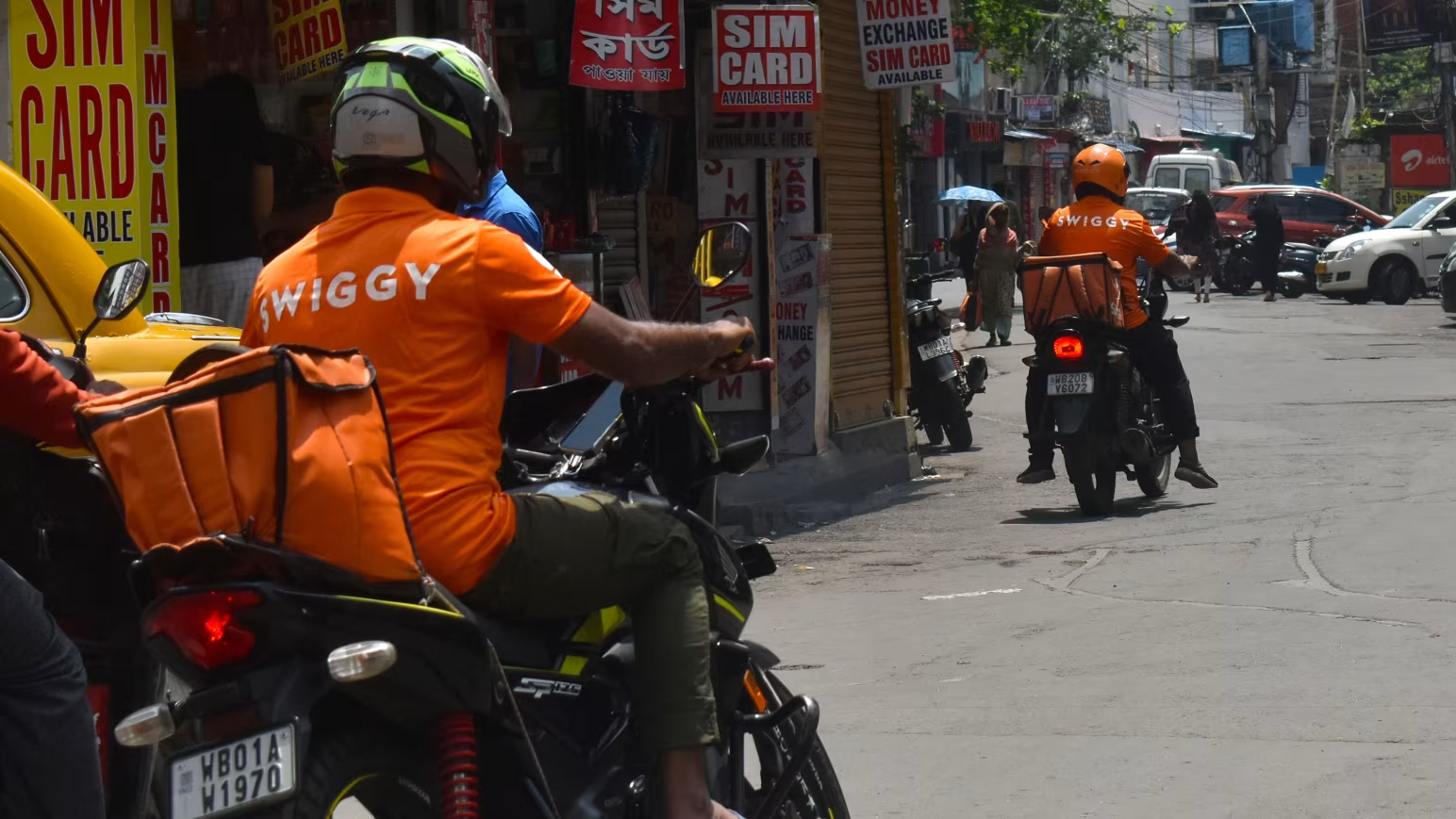
Tens of thousands of app-based delivery workers in India went on strike over New Year’s Eve, protesting a system they say is defined by relentless pressure, including requirements to deliver items in under 10 minutes.
The workers are calling for “fair pay, dignity and safety,” as well as an immediate ban on a marketing hook that commits them to delivering groceries to any address within a roughly three kilometer (1.8 miles) radius within 10 minutes – no easy feat in India’s notoriously traffic-clogged cities.
They are also protesting against the automated systems used by the platforms to penalize delivery workers and reduce their ratings when delays occur, and are asking for comprehensive social security including health insurance and pensions. More than 200,000 workers joined the strike, according to the Indian Federation of App Based Transport Workers who organized the strike.
While quick commerce is a global phenomenon, in India, a nation of 1.4 billion people and where a roughly a million new jobseekers enter the market each month, it has become a brutal battleground.
Fueled by a burgeoning middle class with money to spend, speed has become an essential weapon in the corporate battle for market share.
The market is huge – major firm Swiggy has a market capitalization of around $11 billion; its rival Zomato around $28 billion.
Some companies like Swiggy’s Instamart, as well as Blinkit and Zepto, have made the 10-minute delivery promise a signature marketing hook – a strategy that workers say can come at the cost of their safety and well-being.
And on top of this, many platforms do not classify their riders as employees, legally absolving the companies from providing the many benefits that the workers are demanding.
ne 41-year-old Swiggy delivery driver in the city of Hyderabad told CNN he makes a base rate of 5 rupees (less that 10 cents) per order and has the potential to earn more based on the number of orders and distance he travels. He works from 7pm to 5am every day, he said.
“We have to pay for our own fuel and bike maintenance,” he said, asking for anonymity for fear of retribution.
And then at least 50 rupees (56 cents) a day goes in paying for something to eat,” he said. “I didn’t think this is what I would be doing in my 40s but what other choice do I have?”
He became a delivery driver after his bookshop went out of business during the Covid-19 pandemic, and said he makes about 20,000 rupees per month ($222). More than half of that money goes toward his rent and the school fees for all five of his children, forcing his family to live paycheck to paycheck.
CNN has contacted Swiggy, Zomato, Blinkit, Zepto and India’s labor ministry for a response.
Deepender Goyal, the co-founder of Zomato, said both Zomato and Blinkit delivered “at a record pace” on Wednesday, “unaffected by calls for strikes,” in a post on X.
“Support from local law enforcement helped keep the small number of miscreants in check,” he wrote, adding: “if a system were fundamentally unfair, it would not consistently attract and retain so many people who choose to work within it.”